
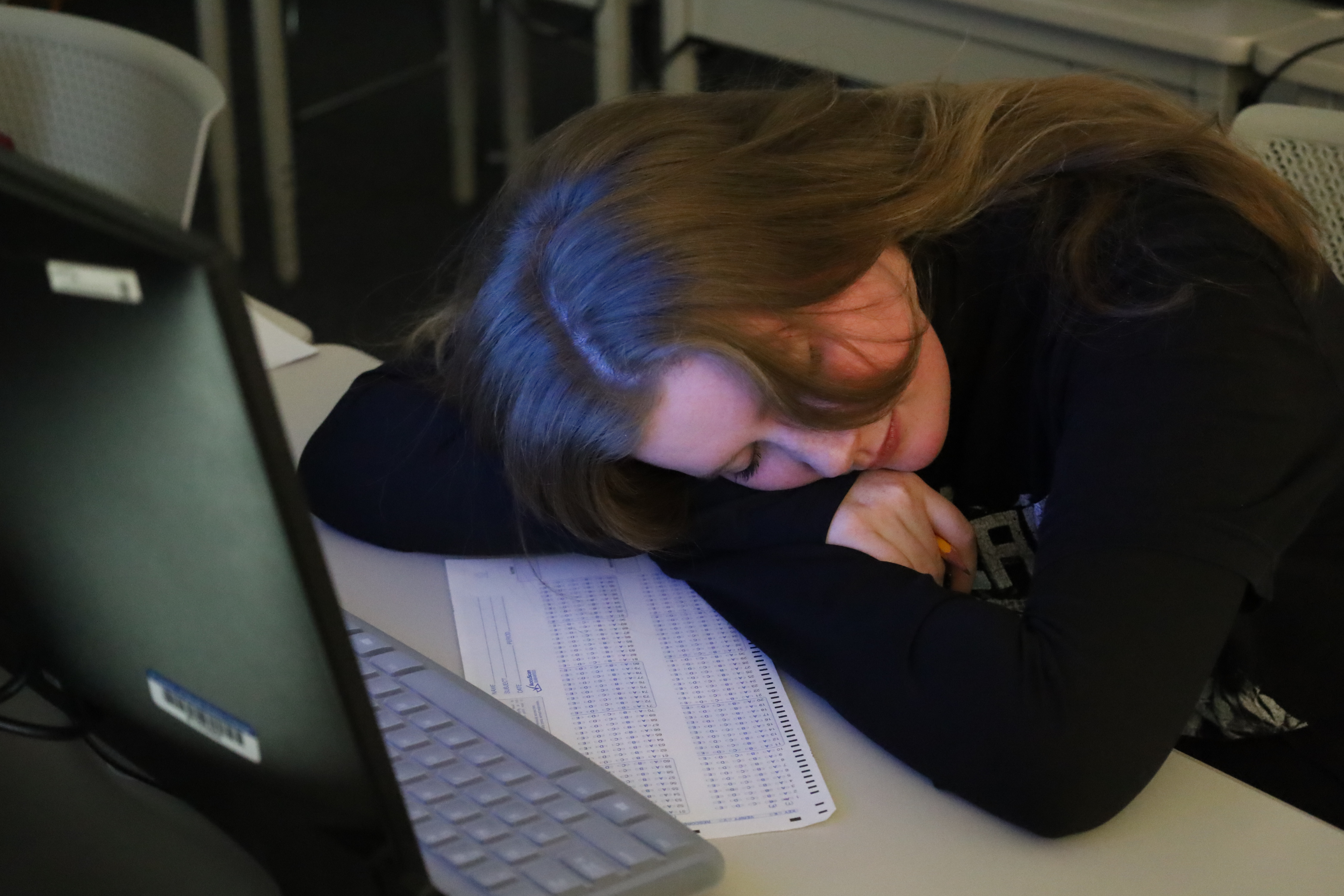
Author: Jaleigh Hinojosa, COMM 2311-601 Newswriting; Photographs from students in COMM 1318 Photography 1; Featured photo by Etta Berry
It’s late, but you still have homework to do. Final exams are getting closer, and your boss just added hours to your part-time job schedule. If that sound familiar, then you probably should be asking yourself if you’re getting enough sleep.
The National Sleep Foundation recommends that young adults between the ages of 18 to 25 should get between 7 and 9 hours of sleep each night.
Research shows many college students fall short of that range.

In 2021, Harvard warned its students about getting enough sleep in an article called “Why You should Make a Good Night’s Sleep a Priority.” It says 70 to 96% of college students get less than eight hours of sleep each weeknight, and more than half of college students sleep less than seven hours per night.
There could be tons of reasons why. Rebecca Canon, the director of SPC Health and Wellness, says sleep problems start to occur when your brain does not shut down at the end of the day.
“For example,” she says, “students may think, ‘Oh my gosh, I forgot to get my paper finished. I am not going to pass this test in the morning.’ Your brain just takes off with things that might happen, or you did not do something right.”
If you’re thinking “who cares?”, you might want to think again.
In a 2019 study published in the npj Science of Learning journal, Fitbits were distributed to 100 students in an introductory college chemistry class for an entire semester at the Massachusetts Institute of Technology. Multiple sleep measures were correlated with in-class performance on quizzes and midterm examinations. Overall, better quality, longer duration, and greater consistency of sleep correlated with better grades.

College students’ poor sleep habits can be attributed to many external factors. It could be homework from their courses, stress from exams, or managing a part time job while managing the responsibilities of a full-time college student. These demands can add up quickly.
Amaris Levario, a first-year student at South Plains College, says some weeks are very stressful.
“I think that if professors coordinated with each other when they have their exams,” she says, “that it would help manage the stress from exams, because sometimes I have 3 exams in 1 week and on the same day and this makes it hard to study for all 3, and add having a part-time job.”
On top of that, there may be something else keeping students awake that they are not even aware of: blue light exposure.


Rebecca Canon warns that our bodies perceive blue light from screens as sunlight, so it’s time to get up and do things.
“Turn off screens an hour before you go to sleep,” she says. “Force yourself to stop scrolling, watching movies or gaming and get the rest your body needs. Read a book, draw or color pictures, or meditate, stretching exercises, or journal.”

So, you might want to try turning off those screens at night to help turn off your brain. Set the alarm to full volume. Final exams are on the way.
Get some sleep.
Leave a Reply