
Story and photos by Giovanni Martinez, COMM 2311.601 (Lubbock)
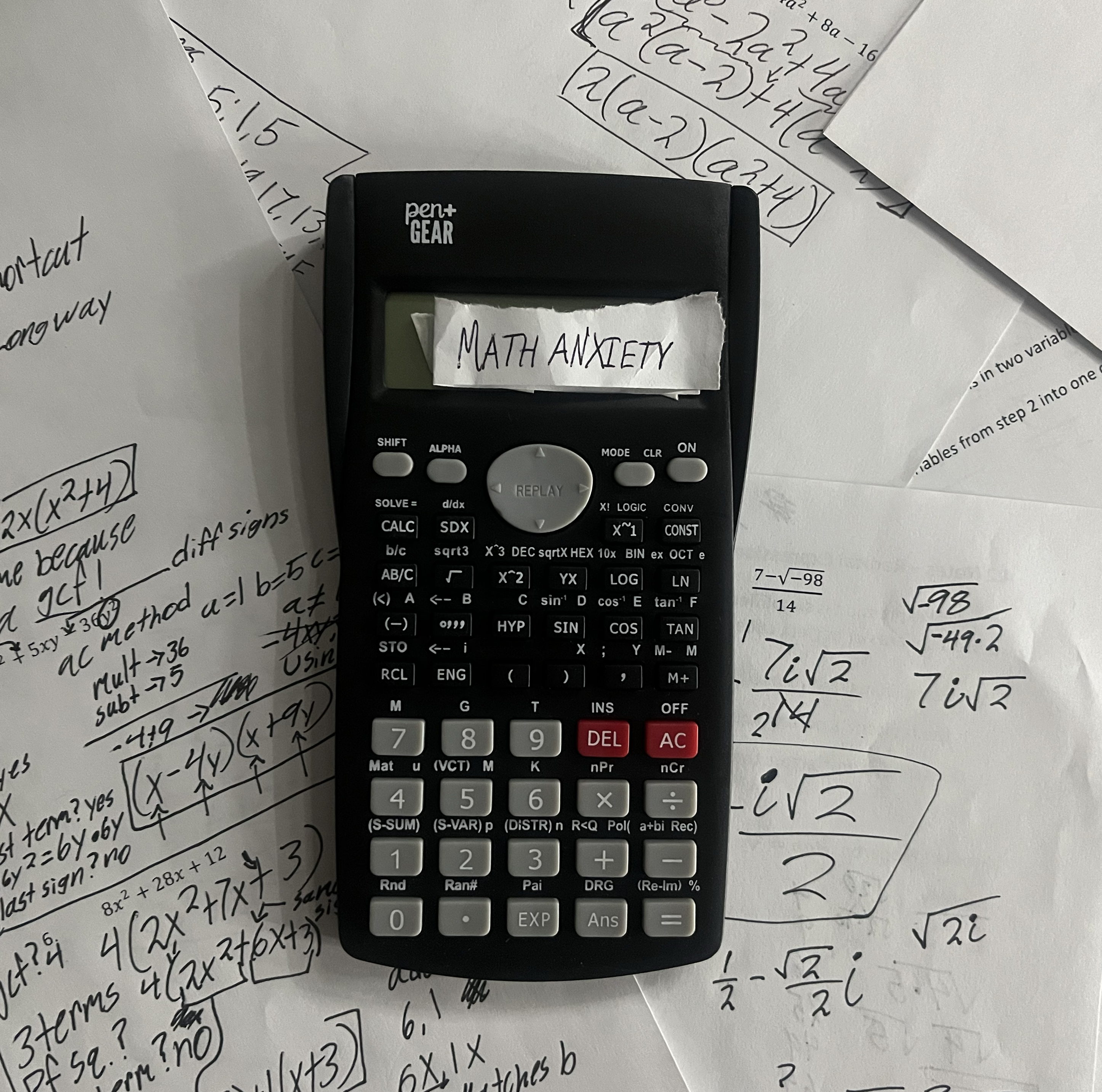
“Mentally Blocked.” “Panicked.” “Stressed.” Those are some of the words South Plains College students used on a recent anonymous survey to describe how they feel when facing a math test.
That survey asked 25 students questions about whether they have “math anxiety”.
SPC Math Professor Morgan Groves says, “Most students have some sort of fear or anxiety toward mathematics.”
Can she put a number on how many? “A good 95% or more,” she says.
Groves says her years of experience teaching math give her clues about who may have math anxiety. Students who do, she says, often walk into class looking “scared” or “lost”.
“But it’s also evident in the way that they interact with me,” she says. “Students that are struggling with high levels of math-related anxiety tend to struggle with constructing questions to ask or even struggle to ask any questions at all, whether it be in class or one-on-one, and that’s a big key as well.”

According to National Numeracy, a UK charity devoted to boosting math skills, there is a list of symptoms a person may have if they have math anxiety. These may include:
- Feeling panicked or stressed
- Feeling flustered or struggling to concentrate on a
calculation
- Increased heart rate
- Sweating and nausea
- Avoiding situations which involve math
Some of the students who answered our anonymous survey wrote about avoiding
math. One student wrote, “If I don’t need another math credit, I am not
taking it.”
So how does someone conquer math anxiety? The answer to that question may
depend on what you read.
Authors of one 2023 American Psychological Association article, for instance,
summarize various studies and point out messages a student gets from
teachers can feed into the student’s beliefs about their math anxiety.
Colleen Ganley, a developmental and educational psychologist at Florida State
University, is quoted in the APA article as saying, “One of the best things parents
and teachers can do is to try to make math a positive experience for kids.”
Groves says she tries to do that in her classes.

“I try to create a rapport with each student,” she says, “because if they feel comfortable just chatting with me, then they’re a little bit more relaxed.”
Groves also makes it clear she believes in the concept that mistakes in the classroom are part of learning.
“It’s okay to spit out a wrong answer,” she says. “Let’s talk about that.”

SPC Math Tutor Patty Perkins, who has worked with students here for over a decade, says she works with five to seven students a day at the Lubbock Downtown Center.

“They always tell me that when they’re in here, they can understand it,” she says, “but then when they get into the test room, they forget how to do things and so it’s not that they don’t know how to do it, it’s just, um, just really the anxiety part of it.”
Perkins says building confidence starts with small successes.
“I think if they can experience some success, however small it is, that they are able to do this work, I think that helps,” she says.

She also stresses the importance of practice, encouraging students to review material regularly.
“You have to make the time to just, even for 30 minutes, go back over what we talked about and see if you can do it again on your own,” Perkins says.
Groves says anxiety is energy that can be redirected.
“One thing that I recommend for my students during a test, if they suffer from bad test anxiety, is to bring something to fidget with in their hands,” she says, “something quiet, something non- distracting,” she says.
Medical experts also recognize more severe forms of fear related to math. The Cleveland Clinic, for instance, identifies an extreme fear of numbers as arithmophobia or numerophobia, a condition that can interfere with everyday responsibilities such as managing money or completing work-related tasks.
Despite how common math anxiety may be, instructors remain hopeful that students can overcome it.

And Groves says she hopes students don’t let fear shape their expectations before they even start assignments.
“Students who come into a math course already fearing or having anxiety toward the course have already pre-judged what they’re going to be able to do,” she says, “and one thing that I try to do with my students is try to get them to change that judgment of themselves and be open to, ‘hey, this semester might be different.’ This semester you might learn something that you struggled with before.”
Leave a Reply