
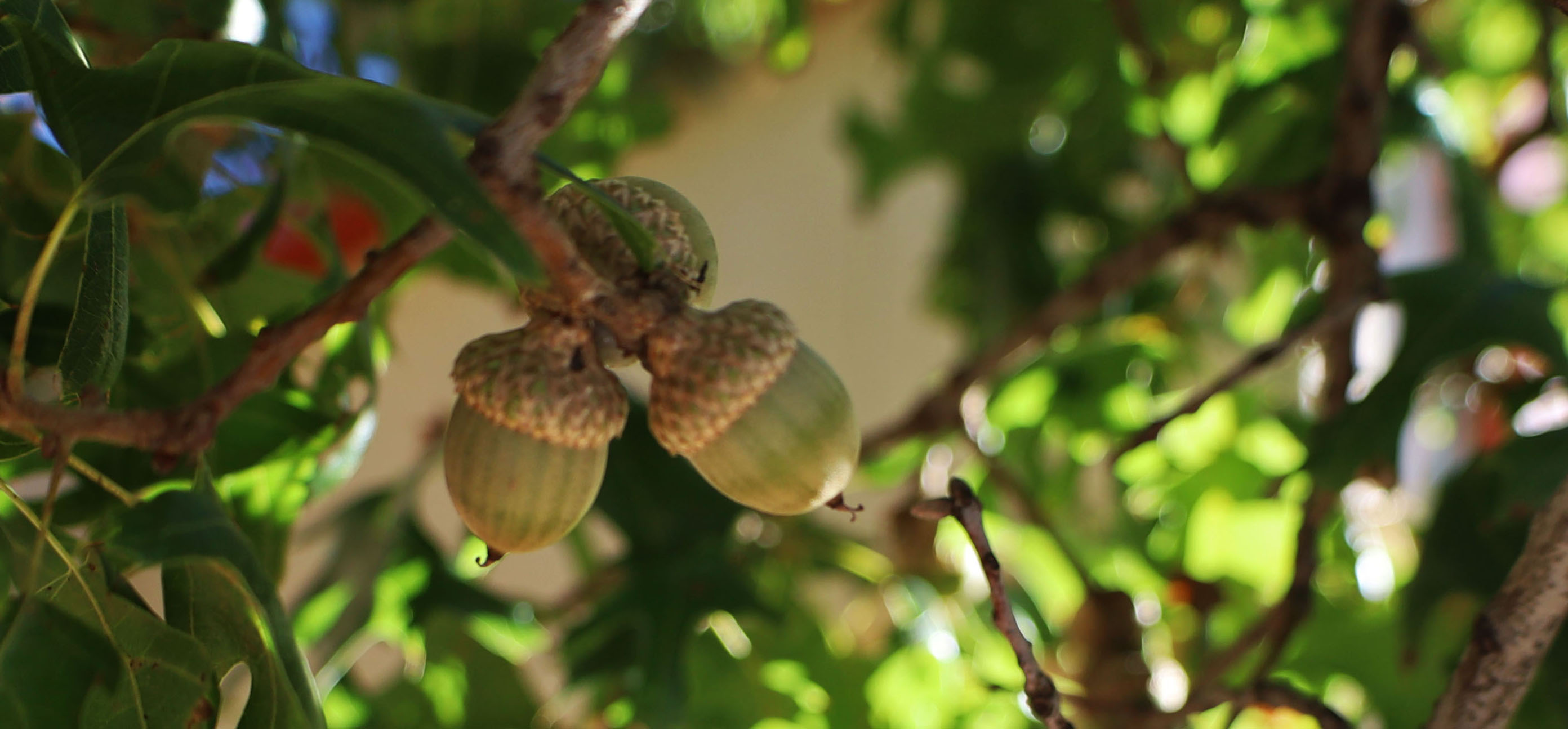
Photos from students in News Photography COMM 1316. Featured photo by Kassandra Martinez.
It appears to be a bumper crop. Hundreds of acorns are hanging and falling from the big oak tree outside the Communications/English building on the Levelland campus.

Last year, that was not the case.
SPC Associate Professor Kristin Bingham, who teaches botany, explains it is a “masting
pattern” that happens every two to five years.


“Scientists aren’t sure about all the specifics that coordinate the when behind mast years,” she says, “but you can kind of think about it like a boom and bust cycle. Depending on conditions and what’s happening in the lifecycle of the tree, one year they will produce an abundance of acorns, enough to cover the entire ground, and then the next few years they won’t produce as many.”

Bingham, who also teaches wildlife management as well as botany at SPC, points out these masting pattern have led to some unique “co-evolutions with herbivores”.
“Consider squirrels that will cash or hide the acorns to save for later,” she says. “This can help distribute the acorns into new habitats where they might be forgotten and can grow into new trees.”


She says acorns are good forage for deer, and many other wild animals as well. That means a mast year can impact hunting season as some deer will prefer the more nutrient dense acorn over corn made available by hunters.
So, it looks like it may be an oak-standing year for acorns.


Happy fall.
Leave a Reply